The previous experiments compared static thrust curve data to SRM.xls simmed thrust curves.
The SRM input was then adjusted to fine tune sim curves to actual static data.
All that comparison for adjustments/accuracy is a mute point if these motors don't have consistency from motor to motor.
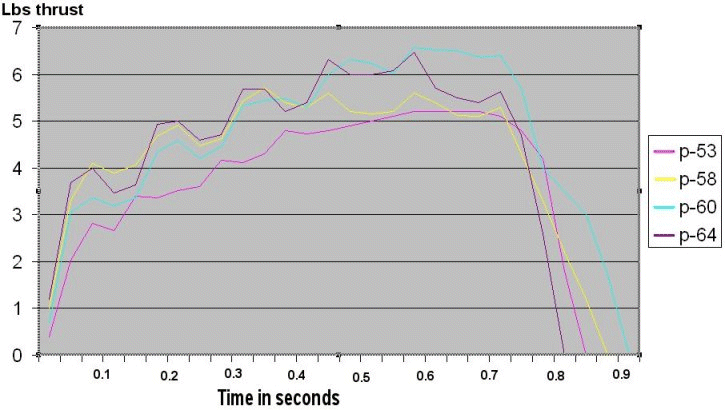
This preliminary experiment graphs the results of 4 motors static data in the same graph for a visual comparison.
The motors were constructed as per the image above. The red areas shows the non-inhibited
surfaces along with the ignitor. The motors were then ignited on a static test stand to measure thrust over time.
This is a spring weight scale so some oscillations occur due to the spring.
The static burn is videotaped and the thrust over time is plotted by analyzing
each frame for thrust. The video captures 30 frames per second.
The first motor was on a scale where I added a dampening system.
The other three statics had little to no dampening so spring oscillations can be seen in their curves.
The first motor #53 has less total impulse (approx. 15 NS) than the others (approx 18 NS).
#53's data designated it as a D16 whereas the others were D19 to D20.
This "experiment" is actually data from other experiments over a period of time.
The data was available for this comparison study so I compiled it into the one graph above.
A variable sneaks in because over time I have been trying to improve the static stand.
To do this study right I should build several motors just for this purpose (as opposed to this scavenged data)
and test them the same static stand that has been calibrated,
or at least tested with an couple Estes motors and compared to published curves.
The current setup has been tested with a C6 Estes and looks good.
It will be interesting to follow the consistency (or lack thereof) with more motors.
A non-oscillating calibrated digital static stand is what I should really pursue before doing much more work with motor data.
(I'm getting tired of frame by frame analysis and hand plotting :-)
 Hit Reload if you don't see motor image
